Automated Lifecycle Management Enhancing Enterprise Agility
Automated Lifecycle Management

Introduction
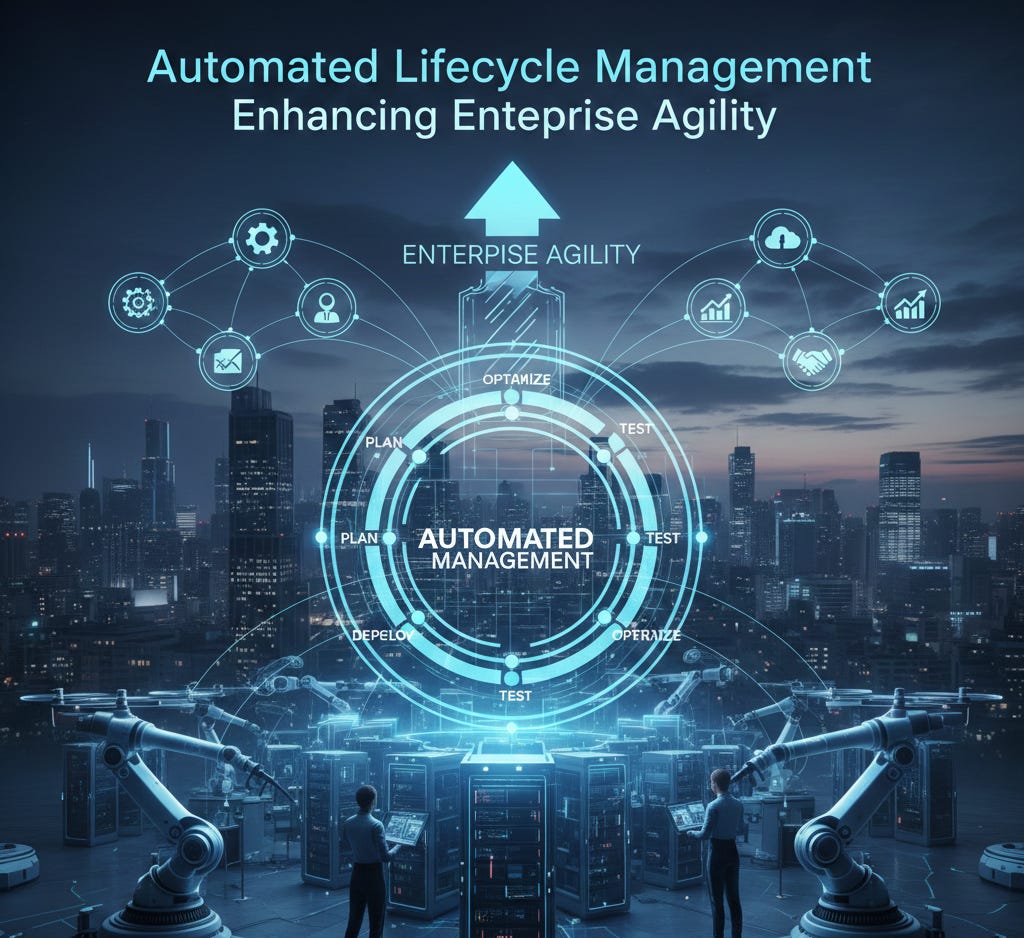
Organizations today operate in fast-moving digital environments where applications, infrastructure, devices, and data constantly evolve. Managing these assets manually across their entire lifespan can create inefficiencies, security gaps, and rising operational costs. Businesses seeking consistency and scalability increasingly rely on automated lifecycle management to streamline processes and ensure every stage of the asset journey is optimized.
From onboarding and deployment to maintenance and retirement, automated lifecycle management introduces structured workflows that reduce manual intervention. It brings clarity, control, and predictability to complex ecosystems. In competitive markets where downtime and compliance risks can impact revenue, adopting automated lifecycle management is no longer optional but essential.
The Strategic Importance of automated lifecycle management
Digital transformation initiatives demand more than technology adoption. They require sustainable processes that support growth without increasing operational strain. Automated lifecycle management ensures that every system, application, or device is governed by predefined policies that maintain performance and security standards.
Without automated lifecycle management, organizations often struggle with inconsistent updates, outdated systems, and fragmented documentation. These inefficiencies create bottlenecks that slow innovation. By integrating automation into lifecycle processes, companies gain the ability to monitor assets continuously and respond to changes proactively.
The strategic advantage of automated lifecycle management lies in its ability to align IT operations with business goals. Automated workflows eliminate repetitive tasks, allowing teams to focus on innovation and strategic initiatives. This alignment enhances agility and supports faster decision-making across departments.
Strengthening Operational Efficiency
Operational complexity increases as enterprises scale. New software deployments, hardware rollouts, and compliance updates can overwhelm IT teams when handled manually. Automated lifecycle management centralizes these processes, creating a unified framework that ensures consistency.
With automated lifecycle management, provisioning new systems becomes seamless. Configurations are standardized, reducing errors and ensuring compatibility across platforms. Automated monitoring also tracks performance metrics and identifies issues before they escalate into system failures.
This level of efficiency improves productivity throughout the organization. Employees gain reliable access to updated tools and secure environments. Meanwhile, IT teams benefit from reduced administrative burdens. Automated lifecycle management transforms reactive troubleshooting into proactive optimization.
Enhancing Security and Compliance
Security vulnerabilities often arise when assets are not updated or decommissioned properly. Manual tracking methods leave room for oversight, increasing exposure to cyber threats. Automated lifecycle management addresses these challenges by embedding security policies into every stage of the lifecycle.
As systems are deployed, updated, or retired, automated lifecycle management ensures compliance with internal standards and regulatory requirements. Automated patch management reduces the risk of outdated software. Continuous monitoring strengthens threat detection and response capabilities.
Compliance audits become more manageable when documentation and reporting are generated automatically. Automated lifecycle management maintains detailed logs of asset activities, providing transparency and accountability. This structured approach builds trust among stakeholders and reduces the risk of regulatory penalties.
Driving Cost Optimization
Financial sustainability depends on controlling operational expenses. Unmanaged assets can lead to unnecessary licensing costs, energy consumption, and maintenance overhead. Automated lifecycle management offers visibility into asset usage and performance, enabling organizations to eliminate waste.
By tracking utilization patterns, automated lifecycle management identifies underused resources and redundant systems. Timely decommissioning prevents organizations from paying for outdated or unnecessary assets. Predictive analytics further support budgeting by forecasting maintenance needs and lifecycle transitions.
Cost optimization does not mean sacrificing performance. Instead, automated lifecycle management ensures that resources are allocated efficiently. Organizations gain greater control over capital expenditures while maintaining service quality and reliability.
Supporting Scalable Growth
As businesses expand, maintaining consistent lifecycle processes becomes increasingly complex. New offices, remote teams, and global operations introduce additional variables. Automated lifecycle management provides the scalability needed to manage growth without compromising standards.
Cloud environments and hybrid infrastructures require synchronized updates and governance. Automated lifecycle management integrates seamlessly with modern platforms, ensuring consistent policies across distributed systems. This unified oversight prevents fragmentation and supports cohesive operations.
Scalability also involves adapting to technological advancements. When new tools or platforms are introduced, automated lifecycle management facilitates smooth transitions. Automated provisioning and configuration reduce deployment time, enabling faster innovation cycles.
Building a Future Ready Infrastructure
Digital resilience depends on structured and intelligent management of assets throughout their lifespan. Organizations that rely on manual processes risk inefficiencies and missed opportunities. Automated lifecycle management lays the foundation for a future-ready infrastructure capable of adapting to rapid change.
Continuous improvement becomes achievable when lifecycle data is analyzed systematically. Automated lifecycle management generates insights that inform strategic planning and resource allocation. Businesses can anticipate future needs and adjust their infrastructure proactively.
Collaboration between IT, operations, and leadership improves when lifecycle processes are transparent and standardized. Automated lifecycle management fosters alignment by providing shared visibility into asset performance and compliance status. This alignment strengthens overall organizational resilience.
The modern enterprise demands reliability, security, and agility. Integrating automated lifecycle management into core operations ensures that assets remain optimized from deployment to retirement. It transforms complex management tasks into streamlined, automated workflows that support long-term growth.
In an increasingly digital world, structured automation defines competitive advantage. Organizations that invest in automated lifecycle management position themselves to innovate confidently, reduce risk, and achieve sustainable operational excellence.