Data Storage Optimization Methods Powering Faster Digital Growth
Data Storage Optimization

Introduction
Modern businesses generate huge volumes of information every day, from customer records and operational files to analytics data and multimedia assets. Managing this information efficiently has become a serious challenge for enterprises that rely on speed, scalability, and security. This is where data storage optimization plays a critical role in improving system performance while reducing infrastructure costs.
Organizations today are no longer satisfied with simply storing data. They want storage environments that support faster access, lower latency, better compliance, and smarter resource allocation. A carefully planned data storage optimization strategy helps businesses improve operational efficiency without constantly increasing storage expenses.
As digital transformation continues across industries, companies are looking for modern ways to streamline storage operations. Whether businesses operate in healthcare, retail, manufacturing, finance, or media, optimized storage architecture supports business continuity and long-term scalability.
Why Businesses Need Data Storage Optimization
Data volumes continue to grow at an unprecedented pace. Traditional storage environments often struggle to keep up with modern workloads, especially when enterprises use cloud applications, AI tools, and real-time analytics platforms. Without proper optimization, storage systems become expensive, slow, and difficult to manage.
Implementing data storage optimization allows organizations to eliminate redundant files, automate storage tiering, and improve data accessibility. These improvements help IT teams maintain high-performing systems while reducing unnecessary resource consumption.
Businesses that invest in storage optimization also experience improved disaster recovery capabilities. Faster backups and better storage management reduce downtime and protect valuable enterprise data. Companies can maintain stronger business resilience while supporting future scalability goals.
Another important benefit of data storage optimization is enhanced user experience. Employees can access files more quickly, applications perform efficiently, and customers benefit from faster digital services. In competitive markets, these performance improvements can directly influence customer satisfaction and operational productivity.
Modern Technologies Supporting Data Storage Optimization
The evolution of enterprise technology has introduced advanced tools that simplify storage management. Intelligent automation, cloud-native infrastructure, and AI-powered analytics are transforming the way businesses handle data environments.
Cloud platforms have become central to modern data storage optimization strategies. Hybrid and multi-cloud environments allow organizations to distribute workloads more effectively while minimizing infrastructure limitations. Businesses can scale storage resources based on demand instead of investing heavily in physical hardware.
Artificial intelligence also contributes significantly to storage efficiency. AI-driven monitoring tools identify unused data, optimize storage allocation, and predict future capacity requirements. These capabilities help organizations make smarter infrastructure decisions while avoiding unnecessary expenses.
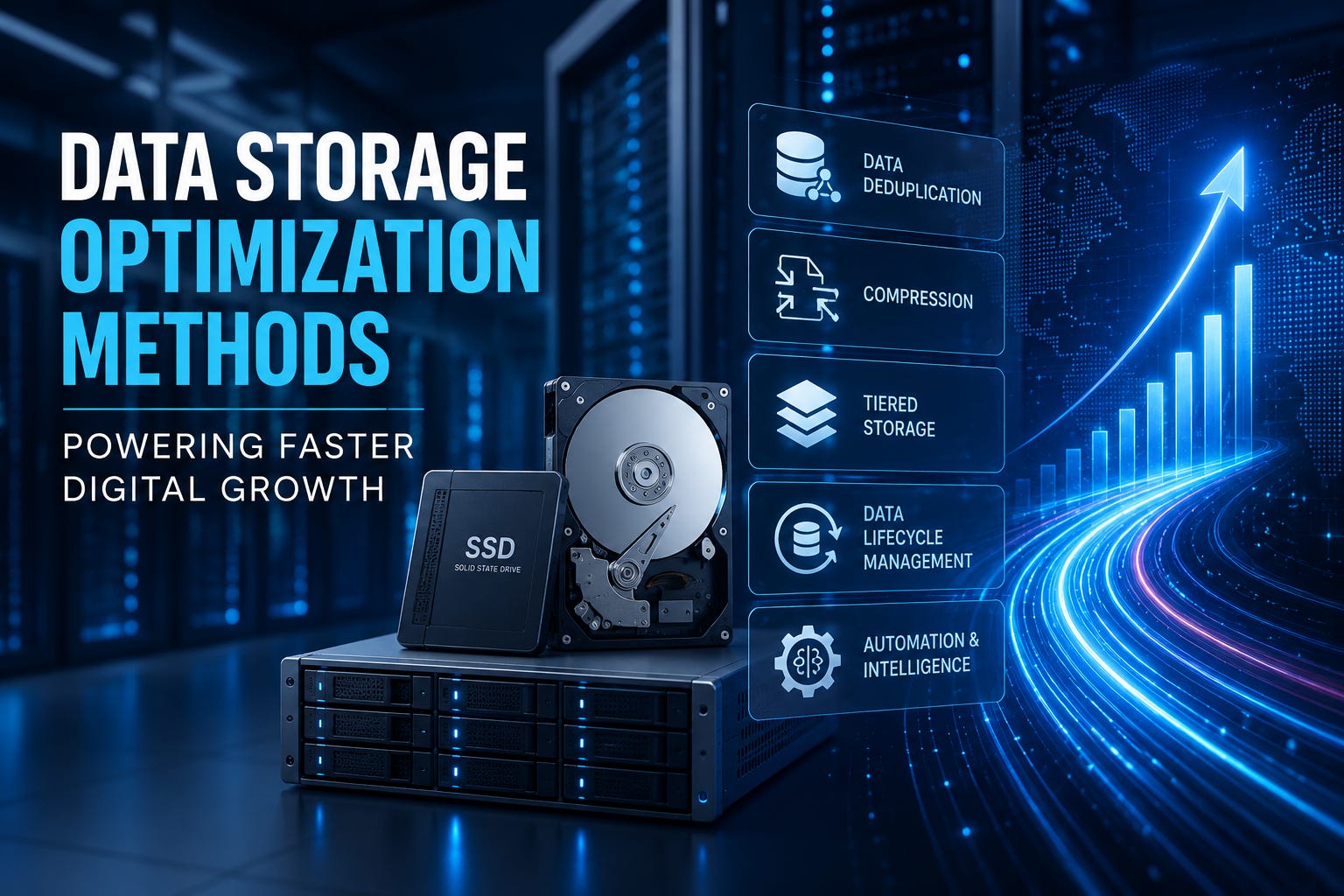
Compression and deduplication technologies further strengthen data storage optimization efforts. By minimizing duplicate information and reducing file sizes, companies can maximize available storage capacity without sacrificing accessibility or security.
Edge computing is another growing trend influencing storage architecture. Organizations processing data closer to the source can improve performance while reducing bandwidth requirements. This approach is especially valuable for industries using IoT devices and real-time analytics systems.
Data Storage Optimization and Business Performance
Efficient storage infrastructure directly impacts overall business performance. Slow or overloaded storage environments often create bottlenecks that affect applications, workflows, and customer experiences. Businesses aiming for agility and scalability cannot afford inefficient data systems.
A successful data storage optimization strategy helps organizations maintain faster system response times while supporting large-scale operations. Employees spend less time waiting for applications to load, and IT teams gain better visibility into storage performance.
Cost efficiency is another major advantage. Storage expenses can increase rapidly when organizations retain unnecessary files or rely on outdated infrastructure. Optimized storage environments reduce operational waste while improving resource utilization.
Cybersecurity also becomes stronger when businesses implement proper storage optimization methods. Organized storage systems make it easier to manage backups, monitor suspicious activity, and enforce compliance standards. Secure data management has become essential for businesses handling sensitive customer and enterprise information.
Companies adopting data storage optimization frequently notice improvements in collaboration and workflow management. Teams can share information faster, access centralized resources efficiently, and maintain smoother communication across departments.
Industry Trends Driving Data Storage Optimization
Digital transformation initiatives continue to accelerate across global markets. Businesses are rapidly moving toward cloud-based ecosystems, automation platforms, and AI-powered operations. These changes have significantly increased the importance of optimized storage infrastructure.
Remote and hybrid work models have also contributed to the growing demand for data storage optimization. Organizations need reliable access to files and applications regardless of employee location. Scalable storage environments help businesses maintain productivity while supporting distributed workforces.
Data governance regulations are another important factor shaping storage strategies. Enterprises must ensure that data is stored securely, retained appropriately, and managed according to compliance requirements. Optimized storage systems simplify governance processes and reduce compliance risks.
Sustainability initiatives are influencing enterprise IT decisions as well. Businesses are actively seeking ways to reduce energy consumption and improve infrastructure efficiency. Effective data storage optimization helps organizations lower hardware usage and reduce environmental impact.
The rise of big data analytics has further increased the need for advanced storage management. Enterprises analyzing large datasets require high-performance infrastructure capable of supporting real-time insights and decision-making processes.
Building an Effective Data Storage Optimization Strategy
Organizations seeking long-term success should approach storage optimization as an ongoing process rather than a one-time upgrade. A structured strategy begins with understanding current storage challenges and identifying opportunities for improvement.
Businesses should first evaluate data usage patterns, storage costs, and infrastructure performance. This assessment helps determine which optimization methods will provide the greatest operational value.
Automation tools can simplify storage management while reducing manual workloads for IT teams. Automated tiering, backup scheduling, and lifecycle management improve operational consistency and reduce administrative complexity.
Security should remain a central component of every data storage optimization initiative. Encryption, access controls, and continuous monitoring help businesses protect sensitive information while maintaining compliance standards.
Organizations should also focus on scalability. As business operations expand, storage systems must adapt without causing disruptions. Flexible cloud-based infrastructure allows companies to scale efficiently while supporting future innovation.
Regular performance monitoring is equally important. Continuous analysis helps businesses identify storage inefficiencies early and implement corrective actions before performance issues escalate.
The Future of Data Storage Optimization
The future of enterprise storage will be shaped by automation, intelligence, and scalability. Businesses are increasingly adopting AI-driven storage platforms capable of self-managing workloads and predicting infrastructure requirements.
Advanced analytics will continue improving data storage optimization by helping organizations make data-driven decisions about capacity planning and resource allocation. Enterprises that embrace intelligent storage technologies will gain greater operational flexibility and competitive advantage.
Quantum computing, edge processing, and high-speed cloud infrastructure may further redefine storage capabilities in the coming years. Organizations that prepare early for these technological advancements will be better positioned for digital growth.
As data continues to expand globally, companies will need smarter strategies to manage information efficiently. Businesses investing in modern data storage optimization practices today will create stronger foundations for innovation, scalability, and long-term operational success.