
Introduction
Data has become one of the most valuable assets for modern businesses, but managing it efficiently is not always easy. As organizations generate and store massive volumes of information, storage costs rise and performance challenges begin to surface. This is where data storage optimization solutions come into play.
Rather than simply expanding storage capacity, companies are now focusing on smarter ways to manage data. With the right data storage optimization solutions, businesses can reduce unnecessary expenses, improve system performance, and ensure that critical data remains accessible when needed.
Understanding Data Storage Optimization Solutions
At a fundamental level, data storage optimization solutions are designed to improve how data is stored, accessed, and maintained. These solutions focus on eliminating inefficiencies while ensuring that data remains secure and readily available.
Many organizations unknowingly store redundant or outdated data. Over time, this leads to wasted storage space and higher costs. By adopting data storage optimization solutions, businesses can identify these inefficiencies and take action to resolve them.
Another key aspect of data storage optimization solutions is aligning storage practices with actual usage patterns. Not all data needs to be stored in high-performance environments, and understanding this distinction is crucial for optimization.
Why Data Storage Optimization Solutions Matter
As data continues to grow, so does the complexity of managing it. Without a clear strategy, organizations may struggle with rising costs and declining performance. This is why data storage optimization solutions have become essential.
By implementing data storage optimization solutions, businesses can gain better visibility into their storage environment. This visibility allows them to make informed decisions about resource allocation and data management.
Performance improvements are another major benefit. When storage systems are optimized, applications run more smoothly, and users experience faster access to information. This makes data storage optimization solutions a critical factor in overall business efficiency.
Enhancing Cost Efficiency with Data Storage Optimization Solutions
One of the most immediate advantages of data storage optimization solutions is cost reduction. Storage expenses can quickly escalate if resources are not managed effectively.
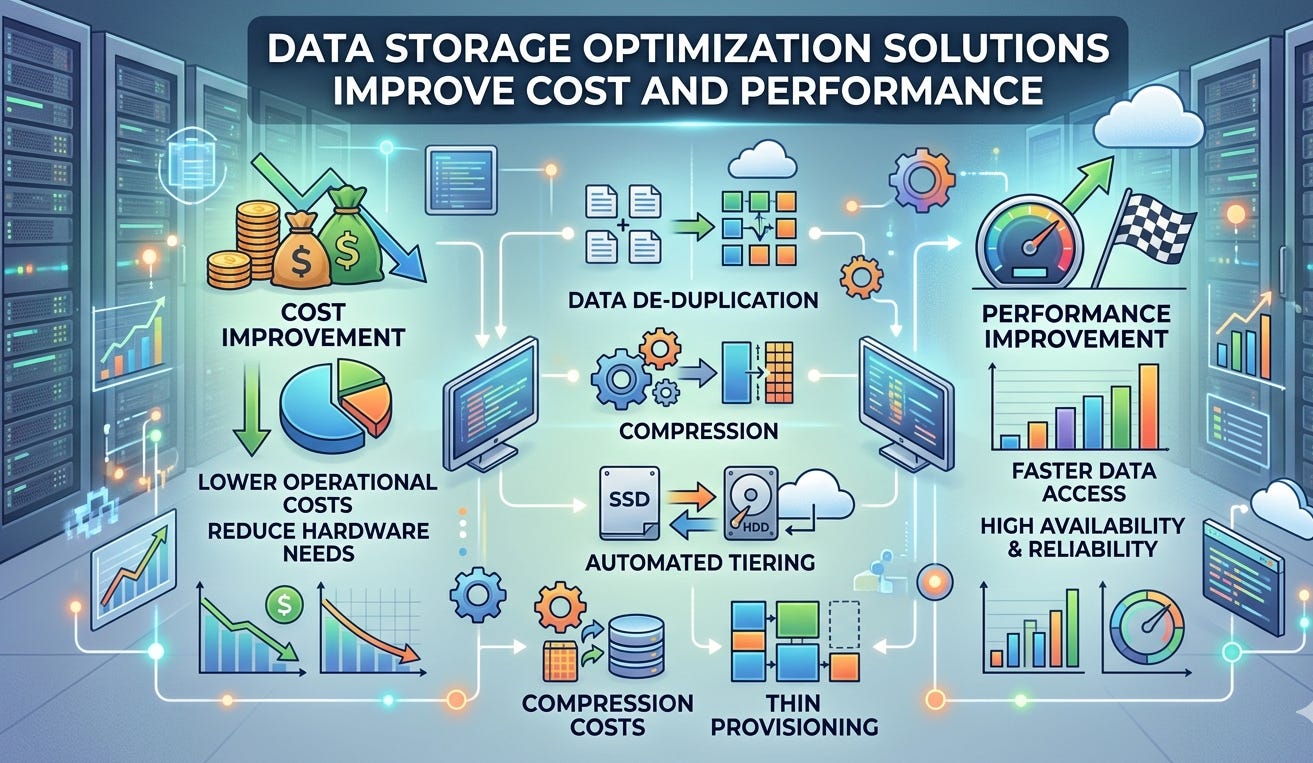
Through data storage optimization solutions, organizations can eliminate duplicate data, archive unused files, and choose appropriate storage tiers. These steps help reduce overall storage costs without affecting performance.
Another important factor is resource utilization. Optimized systems ensure that storage capacity is used efficiently, preventing unnecessary investments in additional infrastructure. Over time, data storage optimization solutions can lead to significant financial savings.
Improving Performance Through Data Storage Optimization Solutions
While cost savings are important, performance is equally critical. Data storage optimization solutions ensure that data is stored in a way that supports fast and reliable access.
By analyzing data usage patterns, businesses can determine which information needs high-speed access and which can be stored in lower-cost environments. This targeted approach to data storage optimization solutions enhances system responsiveness.
Optimized storage also reduces latency, ensuring that applications perform consistently even under heavy workloads. This is particularly important for businesses that rely on real-time data processing.
Data Lifecycle Management and Optimization
Data evolves over time, moving from active use to archival storage. Managing this lifecycle effectively is a key component of data storage optimization solutions.
With proper lifecycle management, organizations can automate the movement of data between different storage tiers. This ensures that data is always stored in the most appropriate environment.
Data storage optimization solutions also help maintain compliance by ensuring that data is retained or deleted according to regulatory requirements. This reduces the risk of legal issues and improves overall data governance.
Challenges in Implementing Data Storage Optimization Solutions
Despite their benefits, implementing data storage optimization solutions can be challenging. One common issue is the lack of visibility into storage usage. Without accurate insights, it becomes difficult to identify inefficiencies.
Another challenge is balancing cost and performance. Over-optimizing for cost may impact system performance, while focusing solely on performance can increase expenses. Effective data storage optimization solutions require a balanced approach.
Organizations may also face technical complexities, especially when dealing with large and diverse data sets. Managing these complexities requires expertise and the right tools to support data storage optimization solutions.
Building a Strategy Around Data Storage Optimization Solutions
To fully benefit from data storage optimization solutions, businesses need a well-defined strategy. This begins with understanding current storage usage and identifying areas for improvement.
Collaboration between teams is essential. IT departments, data managers, and business leaders must work together to define goals and priorities. This ensures that data storage optimization solutions align with overall business objectives.
Automation plays a significant role as well. By automating routine tasks, organizations can maintain consistent optimization without increasing workload. Regular reviews and updates ensure that data storage optimization solutions remain effective as needs evolve.
Future Trends in Data Storage Optimization Solutions
The future of data storage optimization solutions is closely linked to advancements in technology. Artificial intelligence and machine learning are expected to play a major role in automating optimization processes.
These technologies will enable more accurate predictions and proactive decision-making. Data storage optimization solutions will become more intelligent, identifying inefficiencies and suggesting improvements in real time.
Another trend is the growth of hybrid and multi-cloud environments. As businesses adopt diverse storage strategies, data storage optimization solutions will need to adapt to manage data across multiple platforms.
Sustainability is also becoming a priority. Efficient storage practices contribute to reduced energy consumption, making data storage optimization solutions an important part of environmentally responsible IT strategies.
Conclusion
Managing data effectively is a critical challenge for modern businesses. Data storage optimization solutions provide the tools and strategies needed to address this challenge while improving efficiency and reducing costs.
By adopting a proactive approach to data storage optimization solutions, organizations can transform their storage systems into a strategic advantage. They can ensure that data is always accessible, secure, and managed efficiently.
In the long run, data storage optimization solutions are not just about improving storage. They are about enabling better decision-making, supporting growth, and preparing businesses for a data-driven future.