Enterprise Data Integration Software Enhancing Unified Data Systems
Enterprise Data Integration Software

Introduction
In many organizations, data is spread across multiple systems that rarely communicate effectively. Sales platforms, finance tools, customer support systems, and operational databases often work in isolation. This disconnect creates inefficiencies and makes it difficult to gain a clear view of business performance. That is where enterprise data integration software becomes essential.
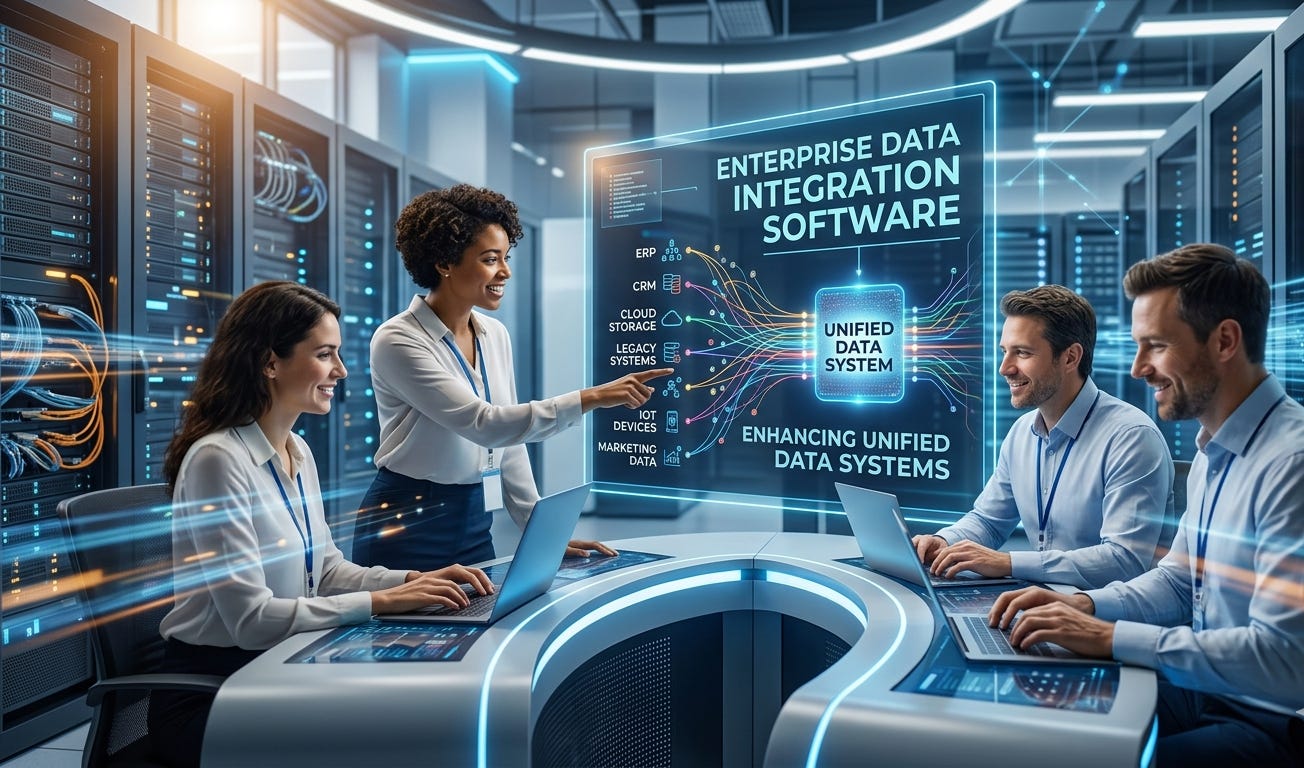
Rather than managing data in silos, businesses are now focusing on bringing everything together into a unified environment. Enterprise data integration software helps connect systems, streamline data flow, and ensure consistency across the organization. It transforms scattered information into a cohesive resource that supports better decisions.
Understanding Enterprise Data Integration Software
At its core, enterprise data integration software is designed to connect different data sources and make them work as one. It bridges the gap between systems, allowing data to move seamlessly without manual intervention.
This type of software goes beyond simple data transfer. It ensures that data is transformed, cleaned, and aligned as it moves between systems. As a result, businesses can rely on consistent and accurate information regardless of where it originates.
The goal is to simplify complexity. Instead of dealing with multiple disconnected tools, organizations can use enterprise data integration software to create a unified data ecosystem that supports everyday operations.
Why Businesses Are Investing in Enterprise Data Integration Software
The demand for enterprise data integration software has grown as businesses become more data-driven. Organizations need quick access to reliable information to stay competitive, and disconnected systems make this difficult.
One of the main reasons for adopting this software is improved visibility. When data is integrated, decision-makers can see the bigger picture and understand how different parts of the business interact.
Scalability is another important factor. As companies grow, they add new systems and generate more data. Enterprise data integration software ensures that this growth does not lead to chaos but instead remains structured and manageable.
Cost efficiency also plays a role. By reducing manual processes and improving data accuracy, businesses can lower operational costs and avoid expensive errors.
How Enterprise Data Integration Software Improves Efficiency
Efficiency is one of the most immediate benefits of enterprise data integration software. Automated data flows eliminate the need for manual data entry and reduce the risk of errors. This allows teams to focus on more strategic tasks.
Another advantage is real-time data access. Instead of waiting for reports or updates, employees can access the latest information whenever they need it. This makes the organization more responsive and agile.
Collaboration also improves significantly. When everyone works with the same data, communication becomes clearer and more effective. Enterprise data integration software creates a shared understanding that supports better teamwork.
Enterprise Data Integration Software in Real Business Environments
In real-world scenarios, enterprise data integration software plays a critical role across various departments. In sales and marketing, it connects customer data from different platforms, enabling more personalized engagement. In finance, it ensures accurate reporting by consolidating data from multiple sources.
Operations teams benefit from improved visibility into workflows and resource usage. This helps them identify inefficiencies and make adjustments quickly. These practical applications highlight how enterprise data integration software supports everyday business activities.
Even smaller organizations can take advantage of these tools. By integrating their systems early, they can build a strong data foundation that supports future growth.
Challenges in Implementing Enterprise Data Integration Software
Despite its advantages, implementing enterprise data integration software can present challenges. One common issue is dealing with legacy systems that were not designed for integration. Connecting these systems requires careful planning and the right approach.
Data quality is another concern. Integration brings data together, but it can also expose inconsistencies. Businesses need to address these issues to ensure that their integrated data remains reliable.
There is also a learning curve involved. Teams need time to understand how to use the software effectively. However, with proper training and support, these challenges can be overcome.
The Future of Enterprise Data Integration Software
The future of enterprise data integration software is closely linked to advancements in technology. Artificial intelligence and machine learning are making integration processes more intelligent and efficient.
Automation is expected to play an even larger role, reducing the need for manual intervention. This will allow businesses to manage their data more effectively and respond quickly to changes.
Another trend is the shift toward cloud-based solutions. These platforms offer greater flexibility and scalability, making enterprise data integration software more accessible to organizations of all sizes.
As these developments continue, integration software will become an even more critical part of business operations.
Conclusion
In a data-driven world, disconnected systems are no longer sustainable. Enterprise data integration software provides a practical solution by bringing together information from across the organization into a unified framework.
The benefits extend beyond efficiency. Integrated data supports better decision-making, improves collaboration, and enables businesses to adapt to changing conditions. While implementation may require effort, the long-term advantages make it a valuable investment.
As organizations continue to evolve, enterprise data integration software will play a central role in shaping how they manage and use their data. It is not just about connecting systems—it is about creating a smarter, more connected business environment.